
How to Manage Documents & Templates for Startups: A Complete Legal Guide

Launching a startup is exhilarating, but amidst the hustle of product development and fundraising, legal documentation often becomes an afterthought. However, poor legal document management can lead to costly mistakes, compliance issues, and even litigation. This guide will walk you through how early-stage startups should organize, store, and track critical legal documents, how to safely use template libraries, and when to bring in legal counsel.
Why does legal document management matter?
Startups operate in fast-paced environments where decisions are made quickly, often with limited resources. This makes having a robust legal document management system essential. Here's why:
- Compliance: Proper documentation ensures compliance with corporate, tax, and employment laws.
- Investor Readiness: Investors conduct due diligence. Missing or poorly organized documents can delay or derail funding.
- Risk Mitigation: Accurate contracts and agreements protect your IP, define responsibilities, and reduce liability.
- Efficiency: A centralized system saves time and reduces human error.
How should an early startup organize, store, and track legal documents so nothing falls through the cracks?
A well-structured digital filing system is the backbone of legal document management. Here’s how early-stage startups should approach it:
Categorize by Document Type
Use a consistent folder structure to separate documents by category:
- 🗂 Corporate Governance (e.g., bylaws, board resolutions)
- 📄 Employment & Contractor Agreements
- 💼 Intellectual Property (IP assignments, NDAs)
- 📊 Fundraising Documents (term sheets, SAFE notes)
- 🤝 Commercial Contracts (customer/vendor agreements)
Implement Naming Conventions
Use clear, date-stamped file names for easy retrieval. Example:
2024-01-15_Employment_Agreement_JohnDoe_Signed.pdf
Are free or low‑cost template libraries safe to use, and how should founders vet them?
Free or low-cost template libraries can be a lifesaver for bootstrapped startups—but only if used wisely.
✅ Pros
- Cost-effective
- Quick to implement
- Useful for standard agreements (e.g., NDAs, offer letters)
⚠️ Cons
- May not comply with your jurisdiction
- Often lack customization for specific business models
- Risk of outdated or incomplete clauses
🔍 How to Vet Templates
Before using a template, check:
- 🚩 Lawyer Involvement: Check whether the templates have actually been drafted or approved by lawyers.
- 📅 Last Updated: Ensure it's recent and reflects current laws
- 🌍 Jurisdiction Fit: U.S. templates may not apply in Canada or the EU
- 📜 Clause Coverage: Are key terms like indemnity, IP ownership, and termination included?
DocLegal.ai provides users with access to 2800+ lawyer-reviewed templates, across various jurisdictions and clauses that can be customized to your specific needs.
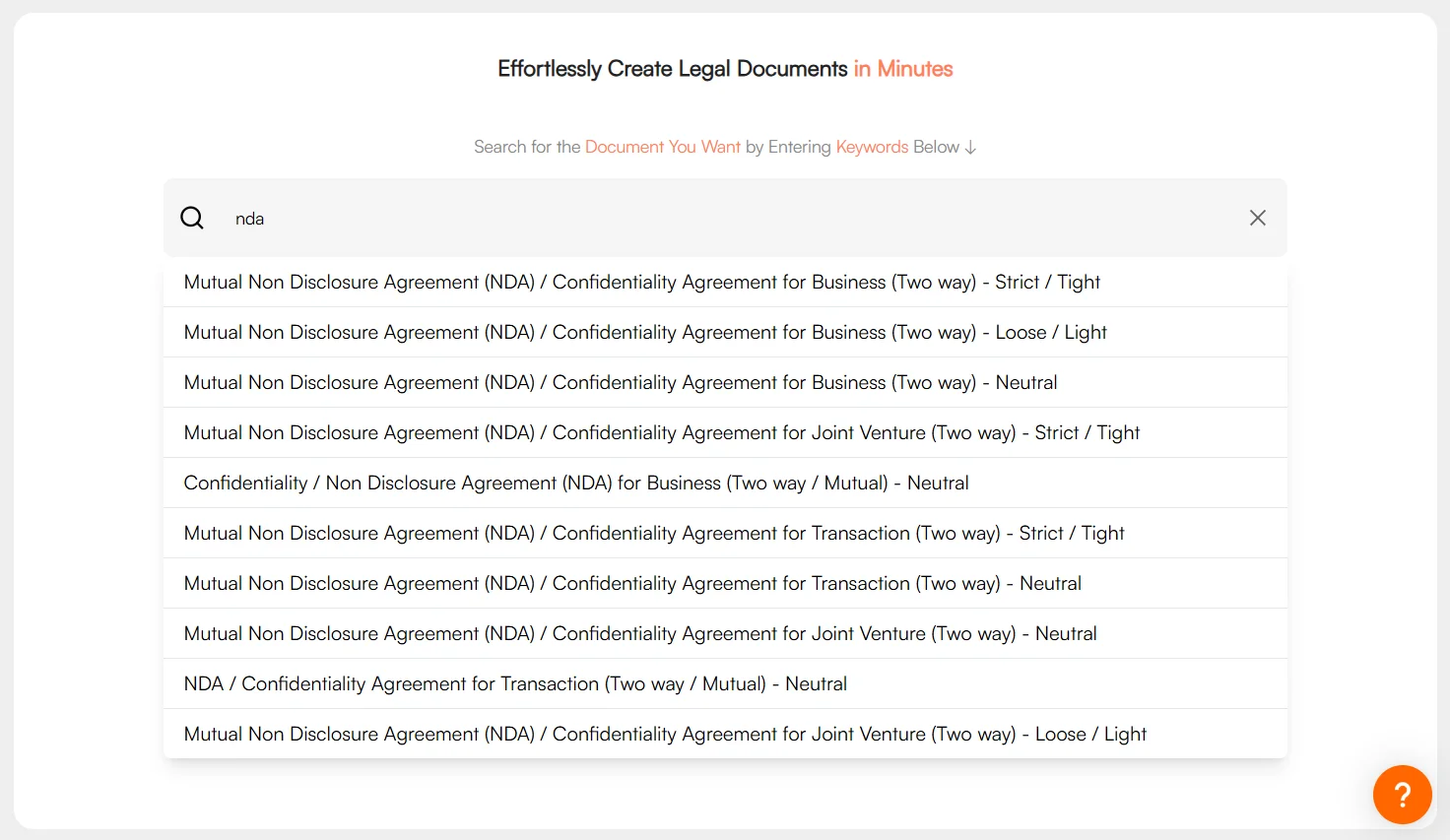
When is it okay to use a template, and when should a startup hire a lawyer to draft or review key documents?
Startups often walk a fine line between budget constraints and legal risk. While traditional legal counsel remains essential for complex matters, innovative tools like DocLegal.ai are transforming how early-stage companies manage legal documents.
📄 Use DocLegal.ai When:
In these cases, it's wise to run the document through a review tool like DocLegal.ai to flag risks or outdated clauses:
- Drafting simple, low-risk documents like:
- Standard NDAs
- Offer letters
- Basic consulting agreements
- You have internal legal knowledge and need speed over customization
DocLegal.ai is also especially useful when:
- You want to generate legally sound documents tailored to your jurisdiction and use case
- You need AI-powered clause analysis to spot red flags or missing provisions
- You’re reviewing third-party contracts and want instant insights before negotiating
- You want to save on legal fees without compromising on quality
DocLegal.ai bridges the gap between DIY templates and full-service law firms by offering:
- Smart document generation based on your inputs
- AI-driven risk detection and clause comparison
- Context-aware customization
⚖️ Hire a Lawyer When:
- Dealing with an especially complex point of law
- About to start a lengthy litigation or regulatory scrutiny process
- Navigating a wide-ranging multi-jurisdictional highly-specific contract
Even when working with legal counsel, DocLegal.ai can complement their work by preparing drafts and reducing billable hours.
Read more about how DocLegal.ai is used in modern law firms: The Power of a Legal Document Generator AI in Modern Law Firms.
How much do startup legal documents typically cost, and what affects price?
Legal fees vary widely based on complexity, geography, and the attorney’s experience.
💰 Typical Cost Ranges
| Document Type | Lawyer Review | Custom Draft |
|---|---|---|
| NDA | $100–$250 | $300–$500 |
| Employment Agreement | $250–$500 | $500–$1,000 |
| IP Assignment | $200–$400 | $600–$1,200 |
| SAFE Note | $300–$700 | $1,000+ |
| Series A Docs | $2,000–$5,000 | $10,000+ |
🧾 Fixed-Fee vs. Hourly
Fixed-Fee: Predictable, good for standard documents
Hourly: Flexible, better for complex negotiations
Tip: Ask for a flat-rate package for early-stage legal needs.
Using DocLegal.ai, you can generate documents for as little as USD$10/month.
