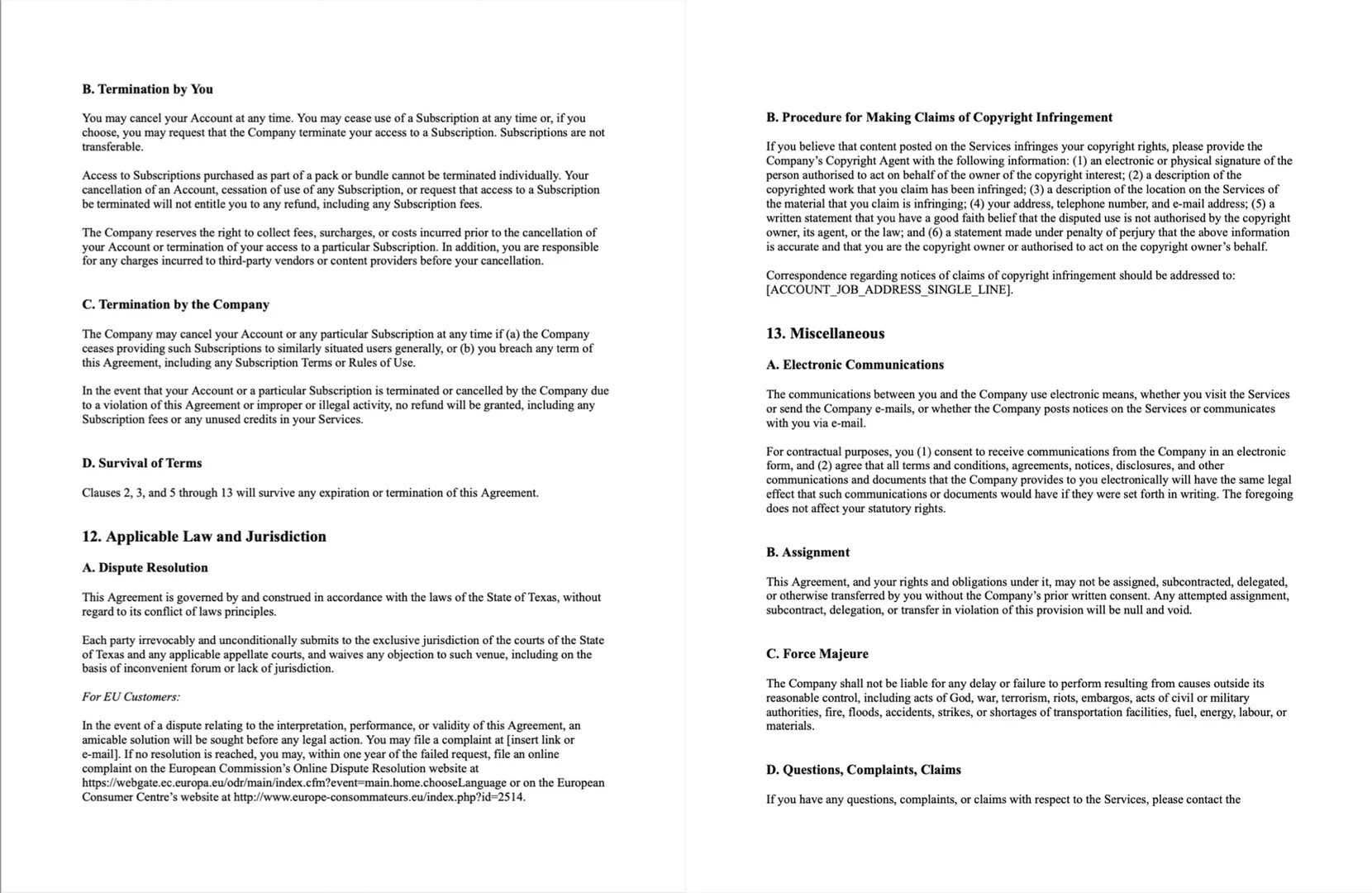
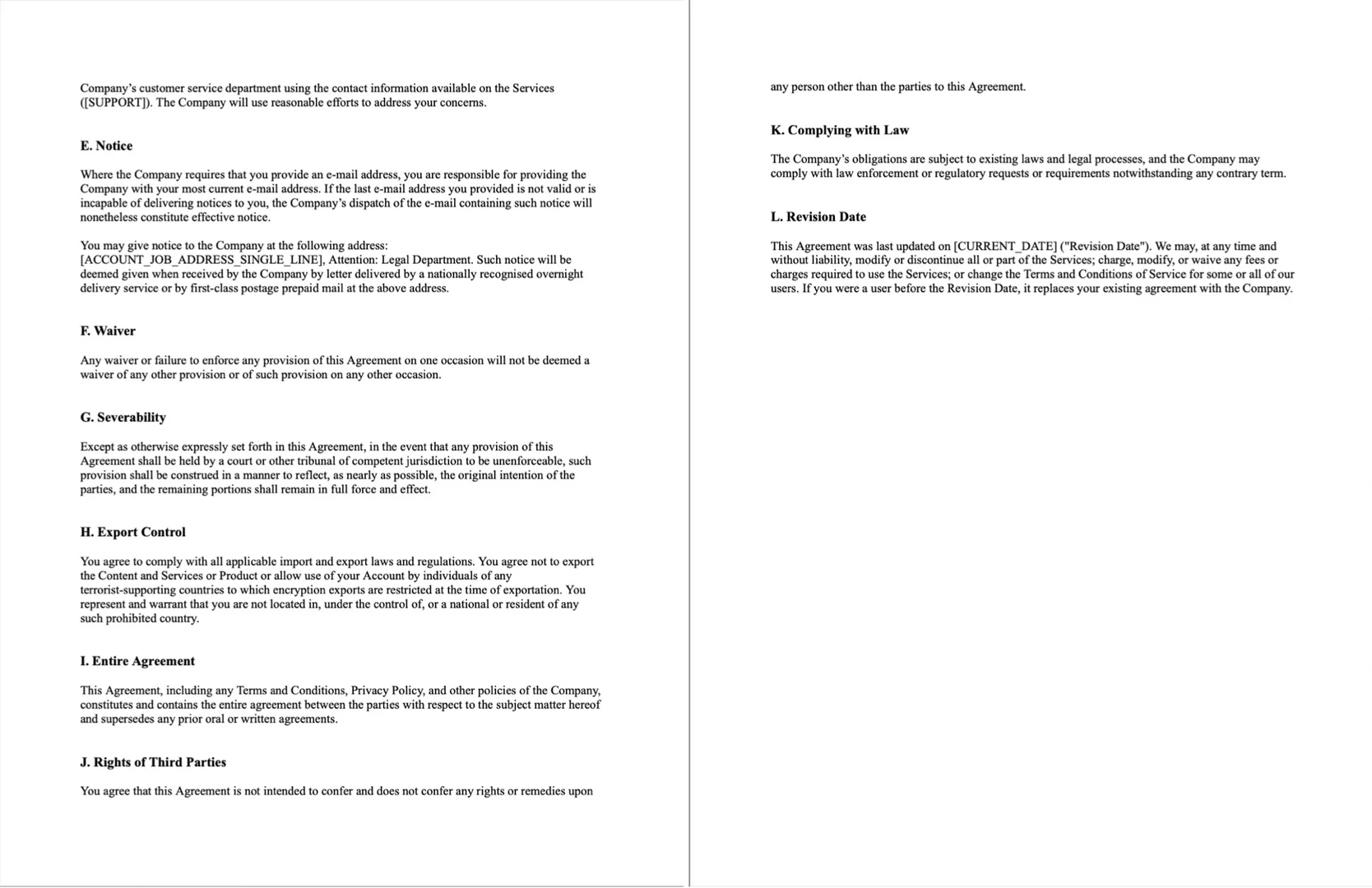
Startups selling online need contracts, website policies that actually match how the product works and how data and money move through the business. Done well, this reduces disputes, protects IP and data, and makes you look credible to customers and investors.
Making online sales safe
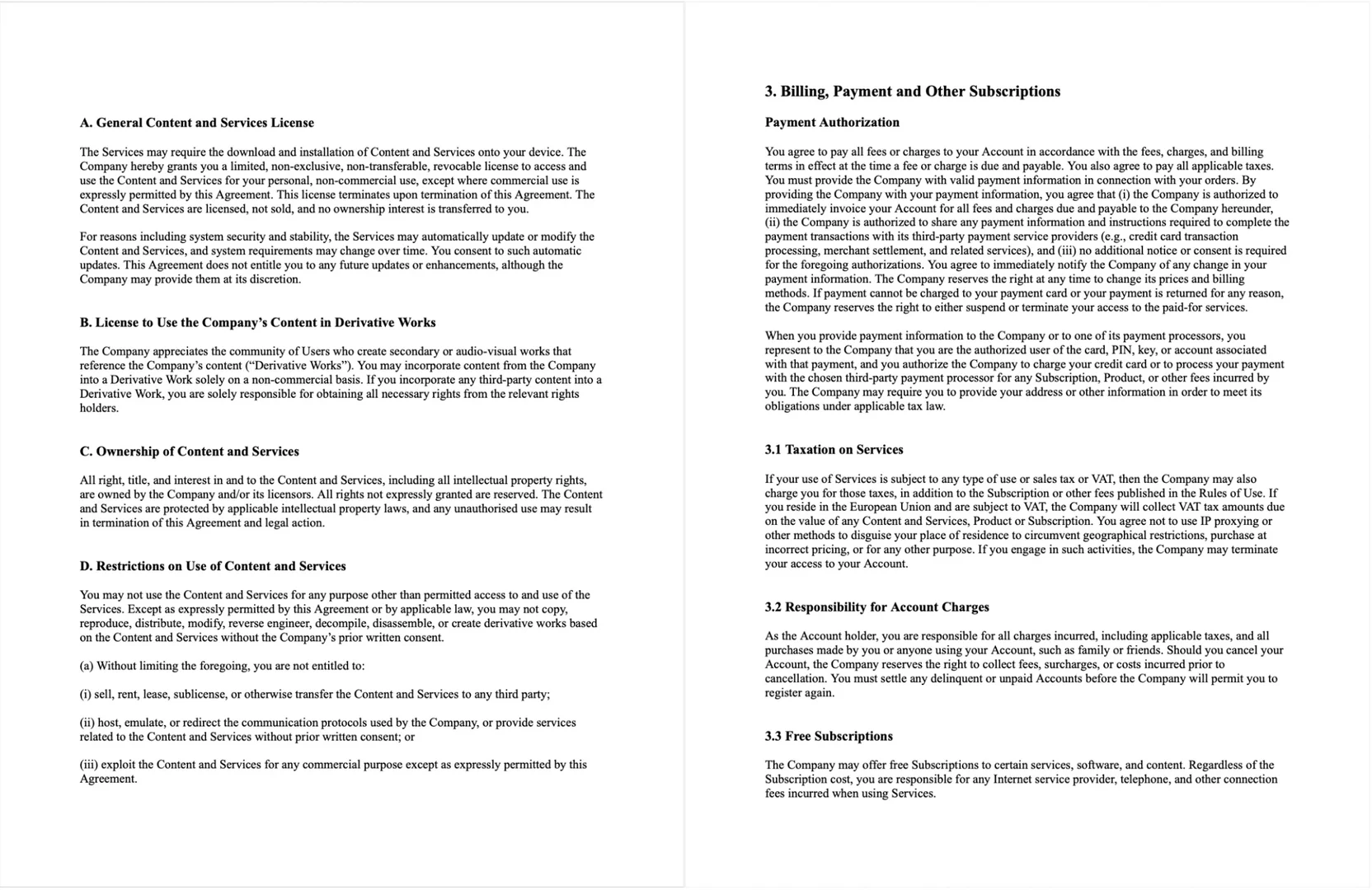
When you sell online (SaaS, marketplace, e‑commerce), your Terms of Service, payment terms, and liability disclaimers are your first line of defence. They should clearly set the rules for using your product, how billing works, and what your startup is and is not responsible for if something goes wrong.
Key essentials to cover in your ToS if you sell online:
- What you provide: a plain-English description of your product or service and its limits (e.g., “analytics tool”, not “financial advice”).
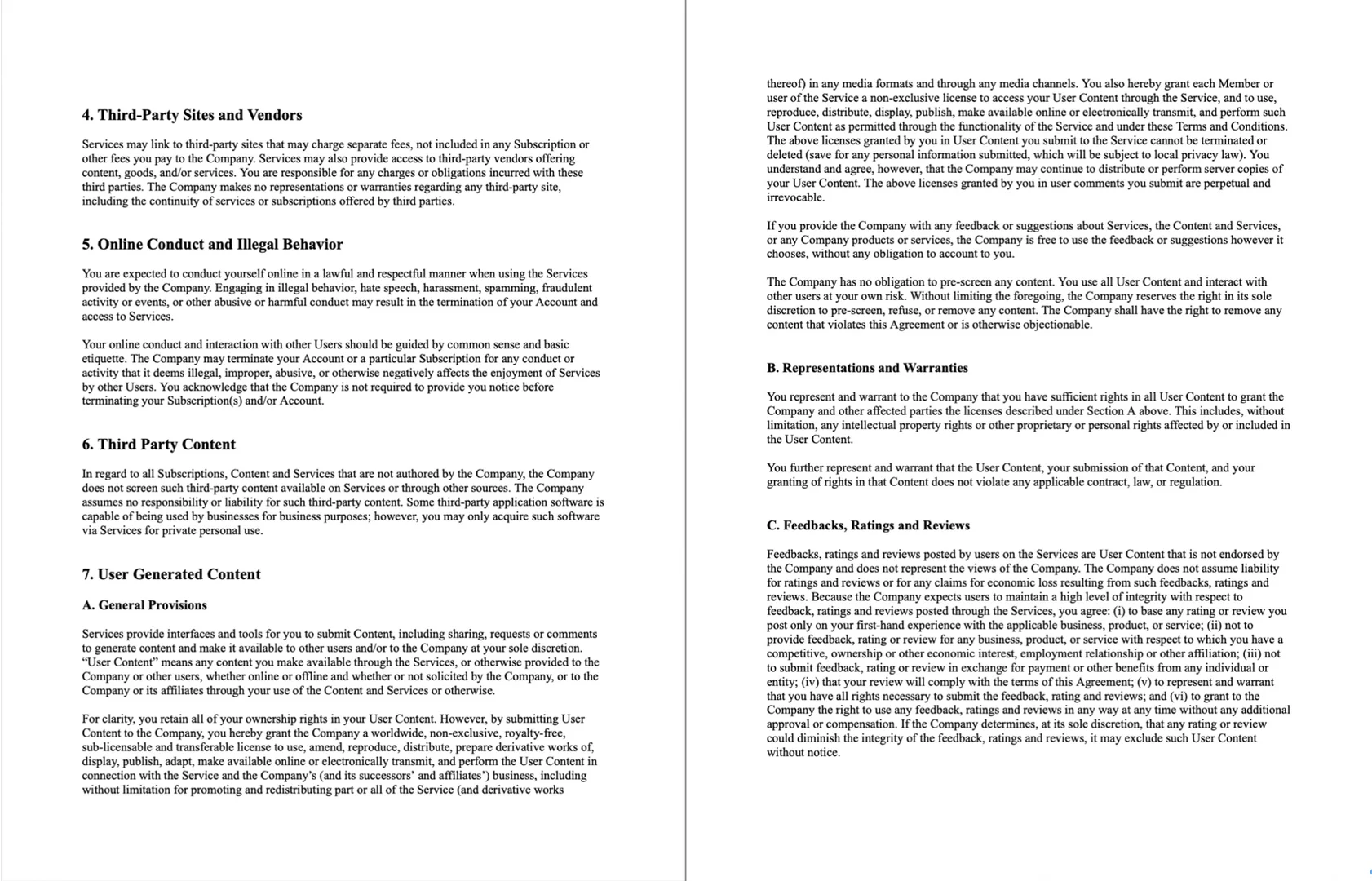
- Use rules: acceptable and prohibited uses (e.g., no scrapers, no illegal content, no account sharing beyond plan limits).
- Accounts and termination: when you can suspend or terminate accounts, and what happens to user data on termination.
- Payments and refunds: pricing, billing cycles, auto-renewals, late/non-payment, refunds, chargebacks.
- IP ownership: who owns your software, brand, and any content users upload; what license you give them; and whether you can use anonymised data.
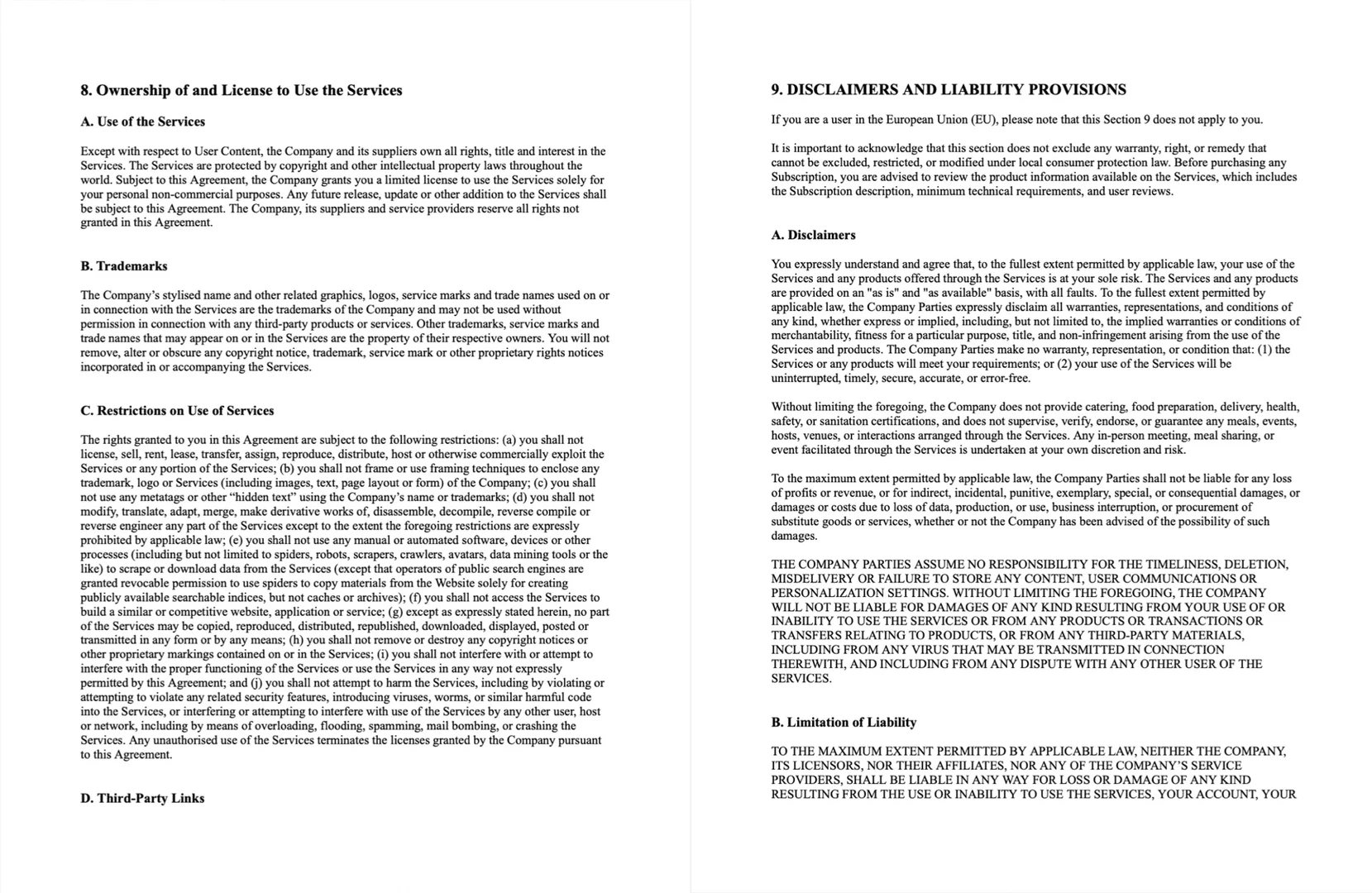
- Disclaimers and warranties: clear “no guarantees” language about uptime, accuracy, and results, plus any limited warranties you do offer.
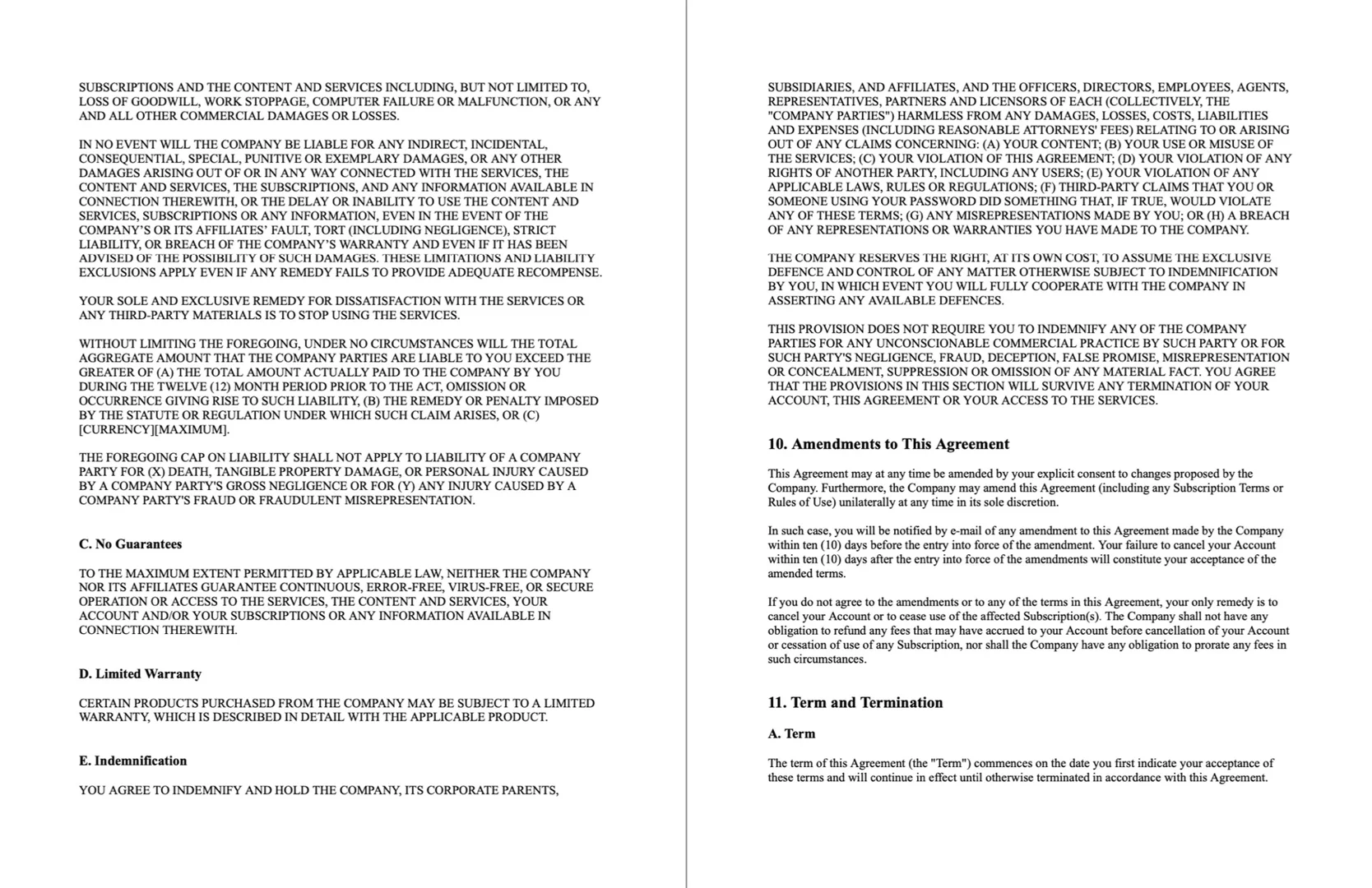
- Limitation of liability: caps on damages (often tied to fees paid), and exclusions for indirect or consequential loss, subject to local law.
- Indemnity: when a user must cover your losses (e.g., if they use your product illegally or infringe others’ IP).
Common mistakes founders make:
- Copy‑pasting another startup’s ToS that assumes different payment flows, jurisdictions, or risk profile.
- No clear refund/chargeback policy, leading to disputes with customers and payment processors.
- Vague limitation of liability wording that courts may ignore or local law may restrict if it is too broad or unfair.
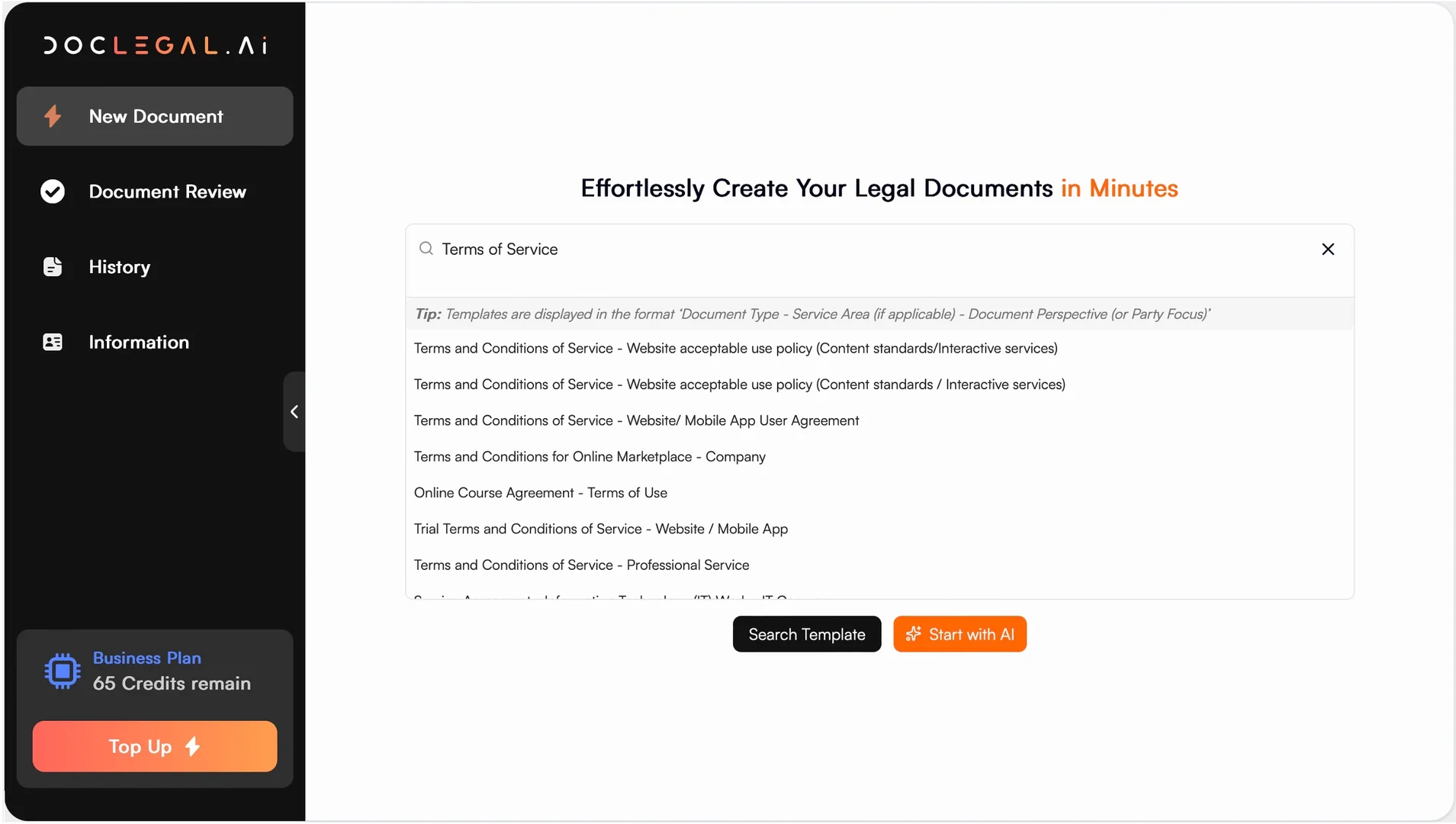
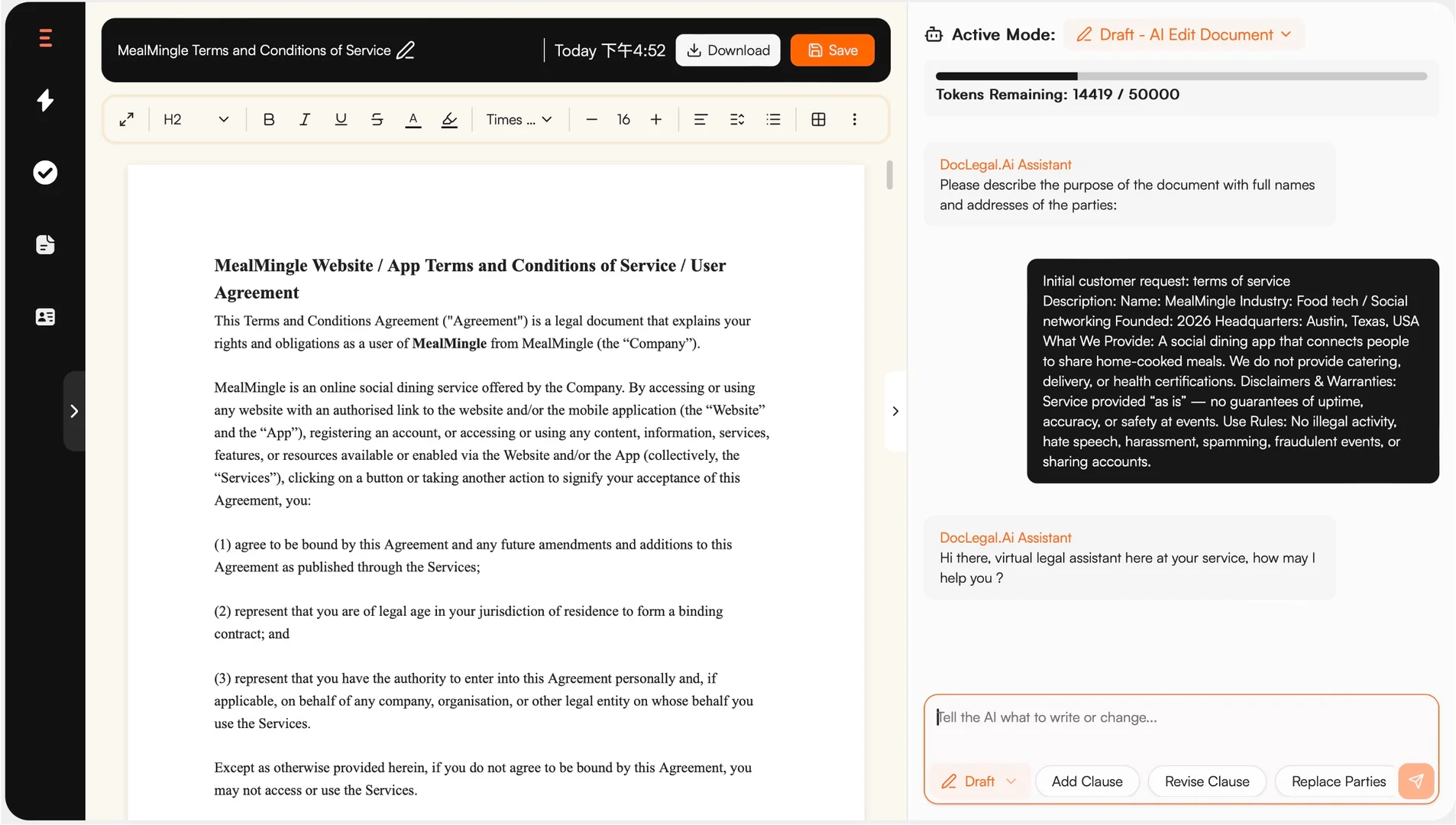
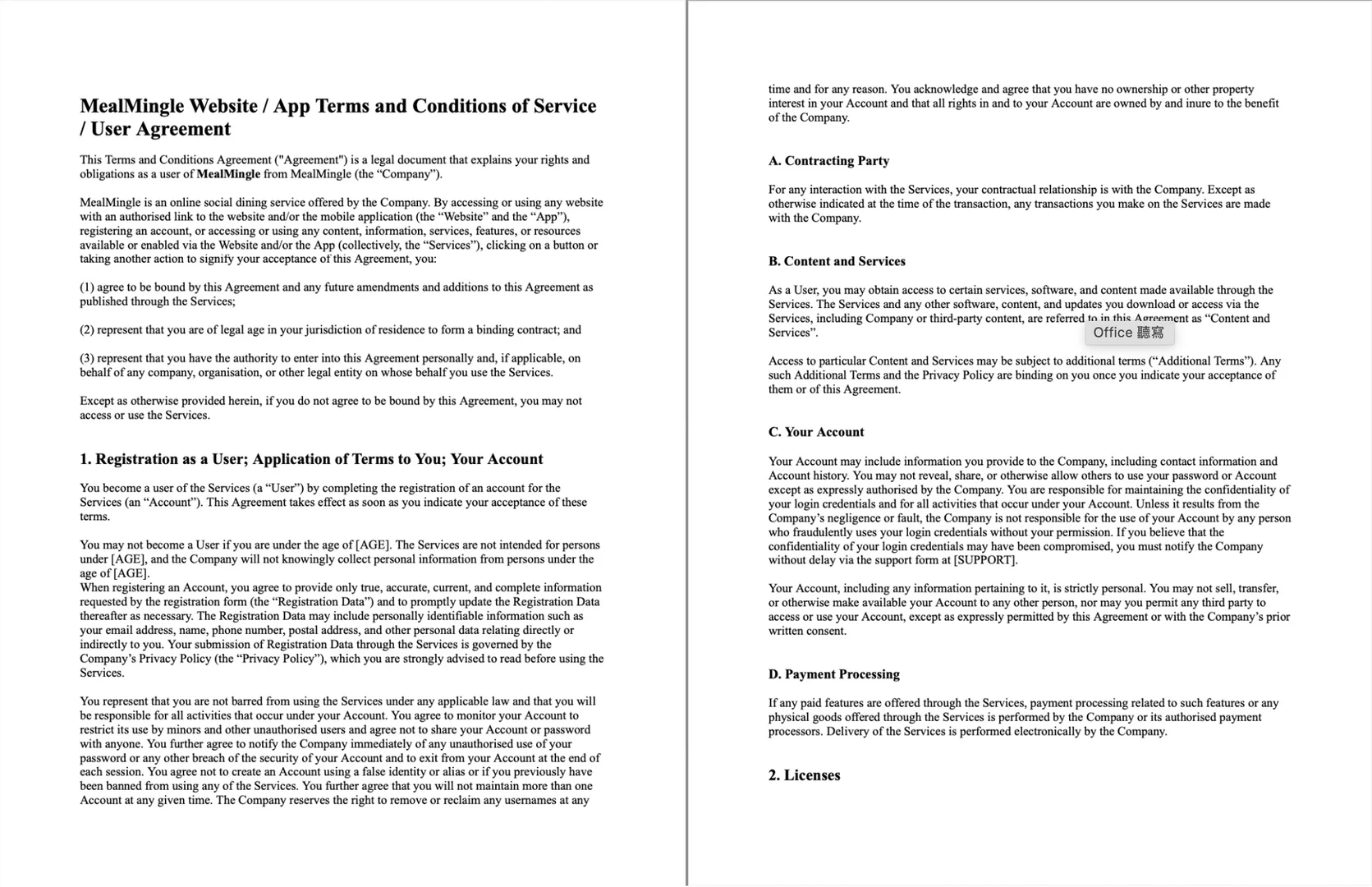
Use DocLegal.ai to create a customized ToS and review it to flag gaps in payments, disclaimers, and liability caps.
Terms of Service that match your product
A “generic” ToS rarely fits a real product, because each startup handles accounts, data, pricing, and third‑party tools differently. The goal is not to have a long document but to have one that mirrors your actual user journeys and risk areas.
To make your ToS match your product:
- Map your flows: list what users can do (sign up, upload data, invite teammates, integrate APIs, pay, cancel, export data) and ensure the ToS covers each step.
- Match your pricing model: subscription vs pay‑as‑you‑go vs marketplace fees need different billing, tax, and refund clauses.
- Reflect third‑party services: if you rely on cloud providers, payment gateways, or analytics tools, your ToS should reference that some parts of the service depend on third parties.
- Align with your Privacy Policy: if your ToS says one thing about data ownership and your Privacy Policy says another, regulators and users will notice.
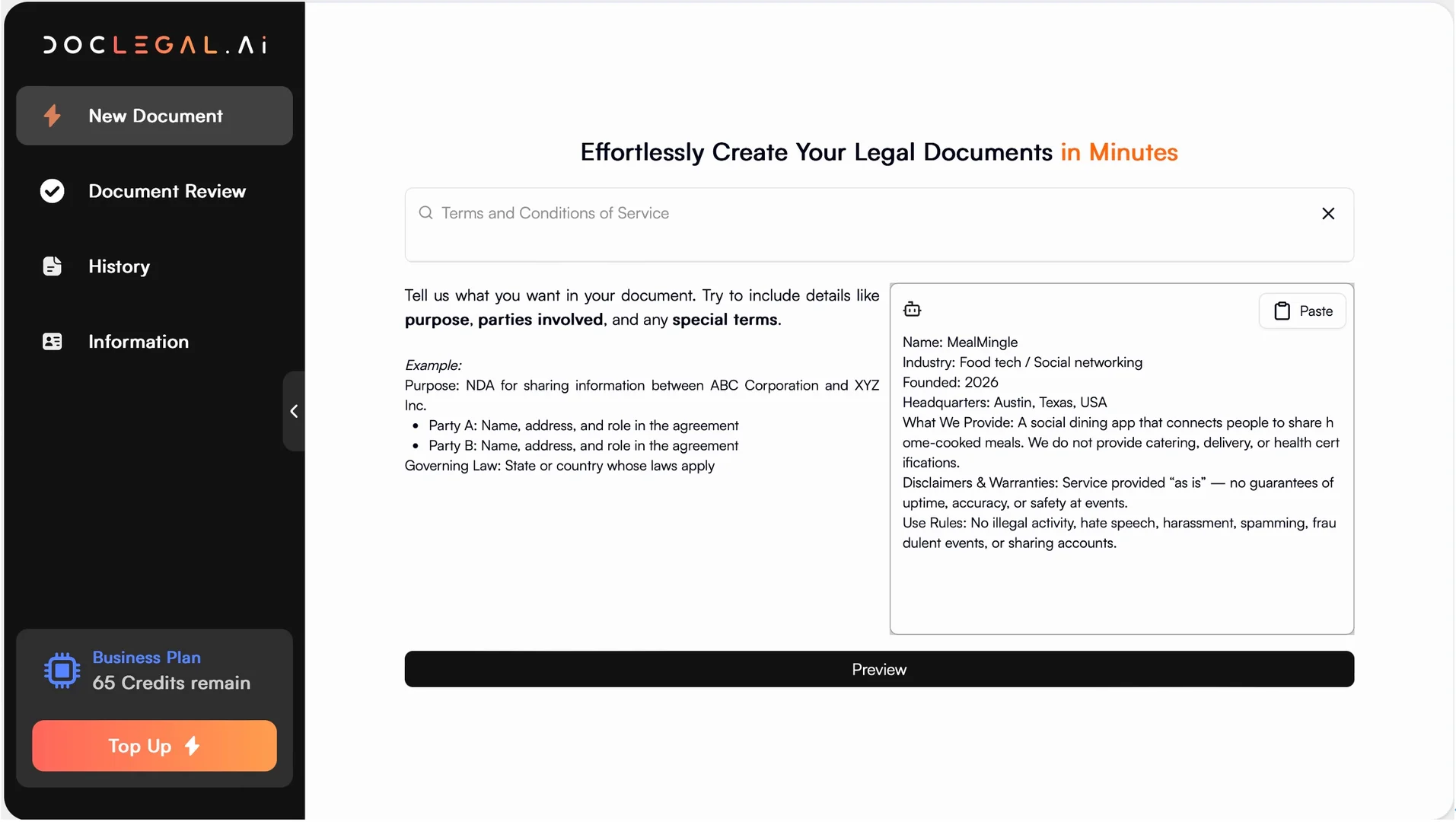
DocLegal.ai can generate ToS drafts using a simple description of what you sell, how you charge, and which countries you serve.
Privacy Policies tied to real data flows
Privacy laws (GDPR, CCPA, and newer state laws) assume your Privacy Policy accurately describes what personal data you collect, why, where it goes, and how long you keep it. A template that does not reflect your actual data flows can be worse than no policy at all, because it is both misleading and non‑compliant.
Essentials your Privacy Policy should cover:
- What you collect: identifiers (email, IP, device IDs), usage analytics, payment details, support logs, etc.
- Why you collect it: account creation, billing, security, analytics, marketing, product improvement.
- Legal bases and user rights: consent vs legitimate interests (GDPR), and rights to access, delete, or opt out (GDPR/CCPA).
- Cookies and tracking: what tools you use (analytics, ads, session recording) and how users can manage preferences.
- Sharing and processors: which third‑party vendors process data for you (cloud hosting, email, CRM, payment) and under what safeguards.
- Retention and deletion: how long you keep data and your deletion or anonymisation practices.
- Security: high‑level safeguards to protect data (without revealing operational secrets).
Common founder mistakes:
- Saying “we do not share data with third parties” while using multiple SaaS tools that clearly process personal data.
- Copying a privacy policy that references laws or rights not relevant to your users or your jurisdiction.
- Not updating the policy after launching new features or integrations that change data flows.
DocLegal.ai can generate a Privacy Policy that tracks your actual systems, plus red‑flag any claims in your existing policy that do not match your current stack.
Read about The Importance of a Privacy Policy for Your Business in 2025.
EULA vs ToS: what your app needs
End User License Agreements (EULAs) focus on licensing software, while Terms of Service govern broader platform use, web features, and commercial terms. Many B2B SaaS founders need both: a license for the app and a ToS that covers accounts, pricing, and support.
For desktop or mobile apps, a EULA should typically address:
- License scope: type of license (non‑exclusive, non‑transferable), number of users/devices, territory, and any usage restrictions (reverse engineering, resale, etc.).
- Updates and changes: whether updates are mandatory, and whether they may change features or requirements.
- IP and ownership: you retain ownership of the software; users get a limited license.
- Warranties and disclaimers: “as is” use, limited warranties (if any), and exclusions for certain types of loss, subject to local consumer law.
- Limitation of liability and indemnity: caps on damages and when users must cover your losses (e.g., user misuse or IP infringement).
Common pitfalls in EULAs and app ToS:
- Not aligning app store terms (e.g., Apple/Google) with your own EULA, causing conflicts.
- License scope too vague, causing disputes when customers exceed seat or usage limits.
- No clear statement on open‑source components and their licenses, where relevant.
DocLegal.ai can generate both EULAs and ToS from one set of inputs, so your web, mobile, and API surfaces share consistent rules and license terms.
Templates vs lawyers vs policy generators
Founders generally balance three options: free templates, manual law‑firm drafting, and automated generators or reviewers. The right mix depends on your risk tolerance, budget, and complexity.
Typical trade‑offs:
- Free templates: good as a learning tool or for simple, low‑value arrangements, but often misaligned with your jurisdiction, regulatory scope, or business model.
- Traditional lawyers: best for complex fundraising, cross‑border deals, or regulated industries, but more expensive and slower, especially when you iterate policies often.
- Policy generators and contract tools: efficient for standardised documents (ToS, Privacy Policy) if they allow enough customisation and are updated for new laws and norms.
DocLegal.ai is designed to sit between raw templates and bespoke legal advice:
- Generate tailored ToS, Privacy Policies, and EULAs from structured questionnaires that reflect your product, data flows, and jurisdiction.
- Run “red flag” reviews on templates you already use, showing gaps in indemnity, limitation of liability, warranties, and confidentiality scopes before they become real risk.
- Export clean drafts for your local lawyer to fine‑tune, reducing time and cost while keeping you in control.
If you want your online contracts and policies to actually match your startup and not some generic template, feed your needs into DocLegal.ai today, then use the generated, product‑specific versions as your new baseline.
.jpeg)


.jpeg)